
Nature and Birds at Le Clos Barrat

Imagine... The sun gently breaks through the canvas of your tent or the curtains of your mobile home. No engine noise, no city bustle. Just the fluted whistle of a Golden Oriole announcing a beautiful day, or the rhythmic drumming of a Green Woodpecker on a nearby trunk.
At Camping Le Clos Barrat, we have a conviction: your holidays are more beautiful when they are shared with the living world.
A Biodiversity Haven in the Heart of the Lot
Located in a region where nature is queen, our campsite is not just a place to stay; it is a true preserved ecosystem. By limiting the use of pesticides and preserving our hedges and old trees, we have created, year after year, a sanctuary for local wildlife.
Today, no fewer than 20 different bird species can be observed daily along the campsite paths. From the majestic Hoopoe to the acrobatic Nuthatch, our feathered neighbors are an integral part of the soul of Le Clos Barrat.
Why This Blog?
We decided to create this space to share the secrets of the nature surrounding us. Whether you are a passionate birdwatcher with binoculars in hand or simply a lover of peace and quiet, this blog is for you.
In our articles, you will discover:
Fact sheets to help you recognize the birds at the campsite.
Unique anecdotes about their behaviors and songs.
Observation tips so you don't miss any of the show without disturbing our guests.
"Slow Tourism": Watching to Recharge
Taking the time to watch a Robin approach your terrace or listening to the laughing call of the Green Woodpecker—that is also the spirit of Le Clos Barrat. It is an invitation to slow down, look up, and reconnect with the essentials.
We invite you, during your next visit to reception, to share your own discoveries with us. Which species did you spot near your pitch?
Get your binoculars ready, the show starts now!
❄️ Who Stays With Us in Winter?
Our faithful feathered residents
As peace settles over Camping Le Clos Barrat and migratory birds like the Oriole or the Hoopoe have headed for the warmth of Africa, the campsite does not fall asleep. On the contrary! Many so-called sedentary birds brave the cold of the Lot and continue to bring life to our oaks and paths.
Why observe them in winter? Because without the leaves, they have nowhere to hide! Here are the stars of our "white season":
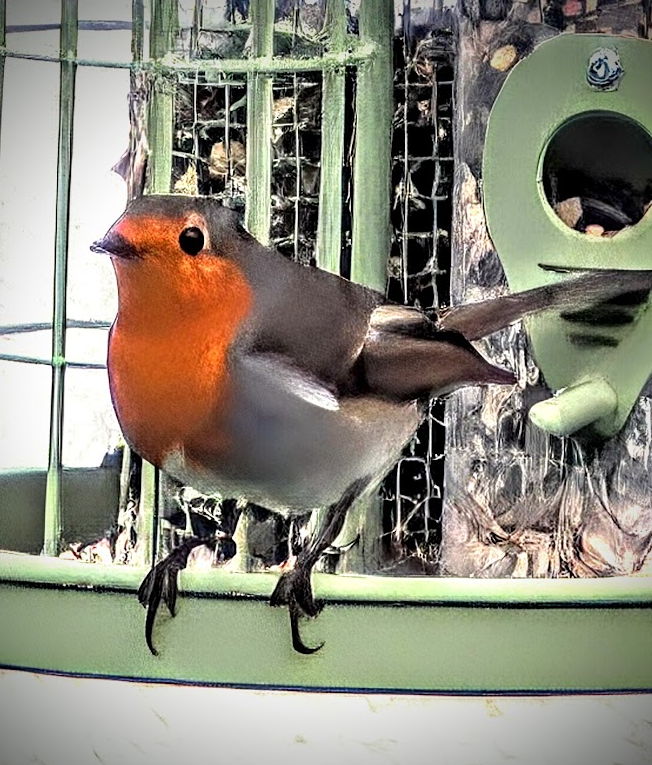
1. The Robin: The little guardian of the campsite
He is the most faithful. In winter, the European Robin never leaves his territory. Very curious, he won't hesitate to come closer if you are gardening or walking near your pitch. Did you know? Unlike others, he sings even in the heart of winter to defend his little domain.
2. The "Chickadee Gang" (Tits)
They are tireless! The Blue Tit, the Great Tit, and the more discreet Marsh Tit roam the campsite in small groups. Their mission: Inspecting every crack in the bark to find larvae or seeds. They are true acrobats often seen hanging upside down from a branch.

3. Woodpeckers:
The woodworkers The Green Woodpecker (with its olive plumage) and the Great Spotted Woodpecker (black, white, and red) are very active this season. Their secret: They aren't afraid of the frost! Their nests carved into trunks (cavities) serve as cozy shelters for cold nights. Listen closely: the "drumming" on dead wood can be heard from afar in the winter silence.
4. The Eurasian Nuthatch: The extreme acrobat
Always there, recognizable by its blue-gray back and black eye-stripe. It is the only bird you will see climbing down tree trunks headfirst to flush out sleeping insects.
5. The European Goldfinch: A painter's palette in the frost
If you see a small flash of yellow, red, and black, that’s him! The Goldfinch is often considered one of the most beautiful birds in Europe. Unlike many other species that turn dull in winter, he keeps his vibrant colors all year round. Where to see them? In winter, they often move in joyful little flocks. Look for them in areas where we leave some tall grass: they love husking thistle or sunflower seeds.

6. The Eurasian Jay: The campsite sentinel
If you hear a harsh, powerful cry echoing through the campsite as soon as a visitor approaches, that’s him! The Jay is the forest’s alarm system. Did you know? He is an incredible imitator. He can mimic a cat's meow or the cry of a Buzzard to scare other birds away from the feeder.

🛠️ How to Help Birds During Winter at Le Clos Barrat?
Water is life: When it freezes, birds can no longer find anything to drink. A simple birdbath with fresh water is vital.
The Lodge: Our nesting boxes aren't just for spring! Many birds shelter there at night to stay warm.
Protective Hedges: Our hedges of local plants provide berries and shelter from the cold wind.


A Spring Full of New Life: Le Clos Barrat Officially Becomes an LPO Refuge!
Le Clos Barrat Campsite is now officially recognized as an LPO Refuge (French League for the Protection of Birds)!
This is a wonderful reward that crowns our daily commitment to preserving the biodiversity of our beautiful Lot region and offering a peaceful haven for local wildlife.
And it seems our feathered friends have spread the word! In this lovely month of May, spring is in full swing at the campsite, and we are thrilled to witness a true baby boom. Births are happening one after another to our great delight, and some of our new "tenants" have even chosen to settle right next to us!
If you walk by the terrace, you'll notice it's particularly popular this year:
On a simple stack of chairs, a family of Black Redstarts has found the perfect spot to build their nest. We are keeping a watchful eye from a distance on the 4 little chicks born there, who are eagerly waiting to be fed.

Just a few steps away, still on the terrace, a pair of Blue Tits has shown great ingenuity by setting up their nest safely inside one of our pillars!
Finally, if you look up, you might be lucky enough to witness a sight as comical as it is touching. On the roof, a baby Hoopoe—that iconic and elegant bird of our region with its beautiful crest—is venturing out of the nest and currently learning how to walk. Its first hesitant steps on the roof tiles are a real treat to watch!

It is an incredible stroke of luck to be able to coexist daily with this wild and abundant nature. As an LPO Refuge, we are more committed than ever to respecting their peace and protecting their habitat.
The Return of the Golden Oriole to Clos Barrat: A Ray of Sunshine in the Trees!
The Lot region is a true paradise for budding ornithologists and nature lovers. Today, we are putting the spotlight on a very special visitor whose arrival truly marks the beginning of the warmer days: the Eurasian Golden Oriole.
After spending the winter in the warmth of sub-Saharan Africa, this great migrant has just made its return to the tall trees of Clos Barrat. And believe us, it doesn't go unnoticed!
How to Recognize It: Plumage with a Tropical Flair
If you are lucky enough to spot the male, you can't miss it. He boasts bright yellow plumage, contrasting beautifully with his deep black wings and tail. You'd think you were looking at an exotic bird escaped from a tropical rainforest!
The male: Bright yellow and black, with a reddish beak.
The female and juveniles: More discreet, they have olive-green plumage on their backs and a light, slightly streaked belly, perfect for blending into the foliage.
Did you know? Despite its bright colors, the Golden Oriole is a shy bird. It spends most of its time hidden high up in the canopy of our large oak and ash trees. Because of this, it is often easier to hear than to see.
Keep Your Ears Open
At the campsite, it's often in the early morning, while you're drinking your first coffee on the terrace of your pitch, that the Oriole gives away its presence.
Its song is one of the most melodious in our region. It's a fluting, powerful, and very characteristic whistle that rings out in a joyful "di-dli-o" (some even hear it say "Oriole"). It's a sweet, exotic melody that instantly gives your days in the Lot a true holiday vibe.
Daily Life at Clos Barrat
If it has chosen our estate to spend the summer season, it's because it finds everything it needs here:
Tall trees to weave its hammock-shaped nest, suspended from the fork of two branches.
A well-stocked pantry: The Oriole is fond of insects, and especially large caterpillars. At the end of summer, it won't say no to some fleshy fruits before beginning its long migration back to Africa.
Grab Your Binoculars!
During your next stay at Clos Barrat, don't forget to pack your binoculars. Make yourself comfortable, look up at the treetops at sunrise or late afternoon, and watch out for this little yellow flash. Seeing it fly from one tree to another is a wonderful reward for patient campers!
In early June, the terrace is always a popular spot for births; Mr. and Mrs. Blackbird, for their part, have chosen the wisteria to build their nest:


Comments